Today I added a new facet to my art of fine art photography & printmaking: That of creating my very own fine-art-monochrome inkset.
The last couple of blog articles discussed the commercial Piezography inkset – available from the studio in Vermont but upwards of £800 including shipping and import costs – and the open source Eboni inks and the mine of knowledge, generously shared by Paul Roark.
https://www.paulroark.com/BW-Info/
I was able to source Eboni pigment in 125ml bottles, within the UK, from Martin at OctoInkjet, along with the Base fluid with which to create my dilutions, and the refillable cartridges to fit my Epson R3880.
https://www.octoink.co.uk/products/Epson-Compatible-Pigment-Ink-%252d-Black.html
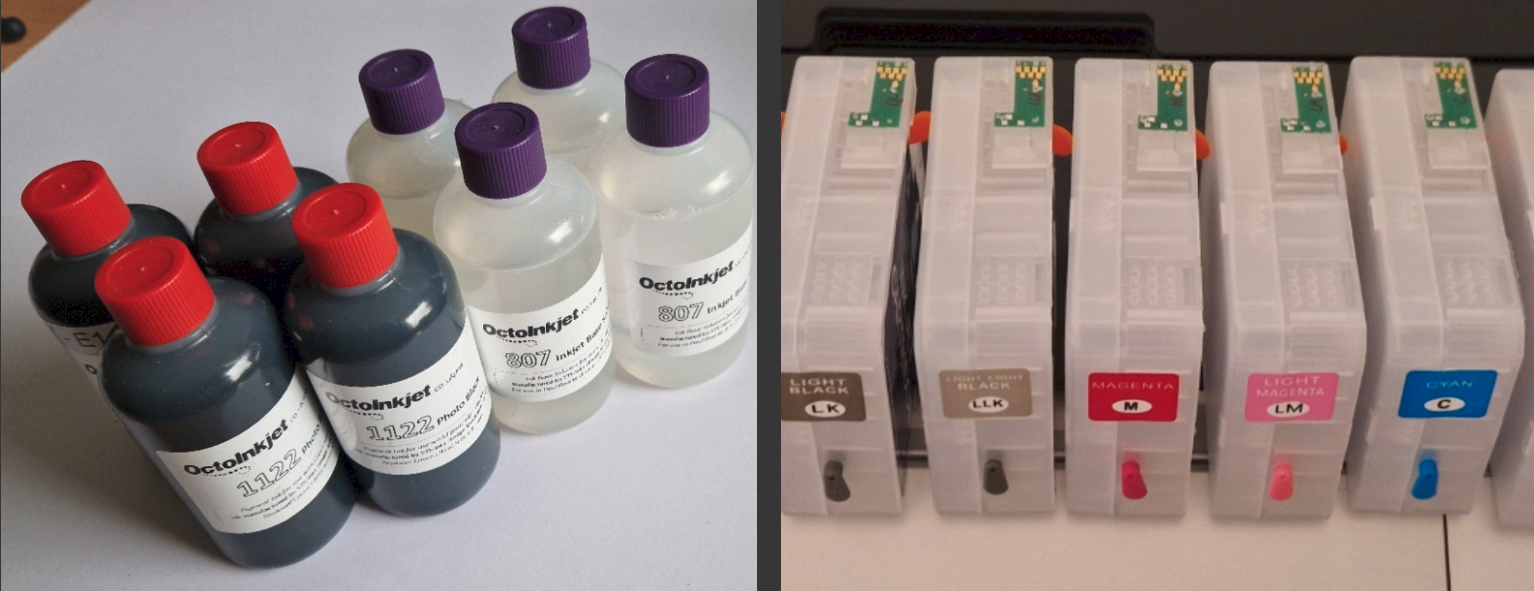
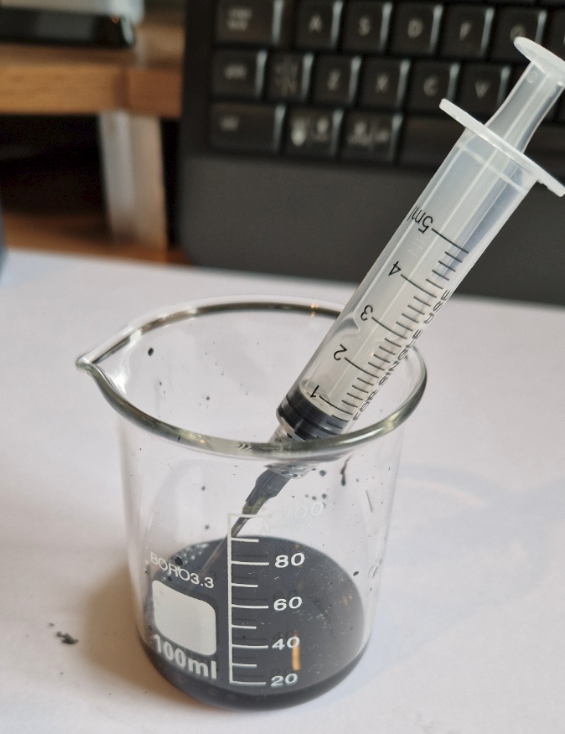
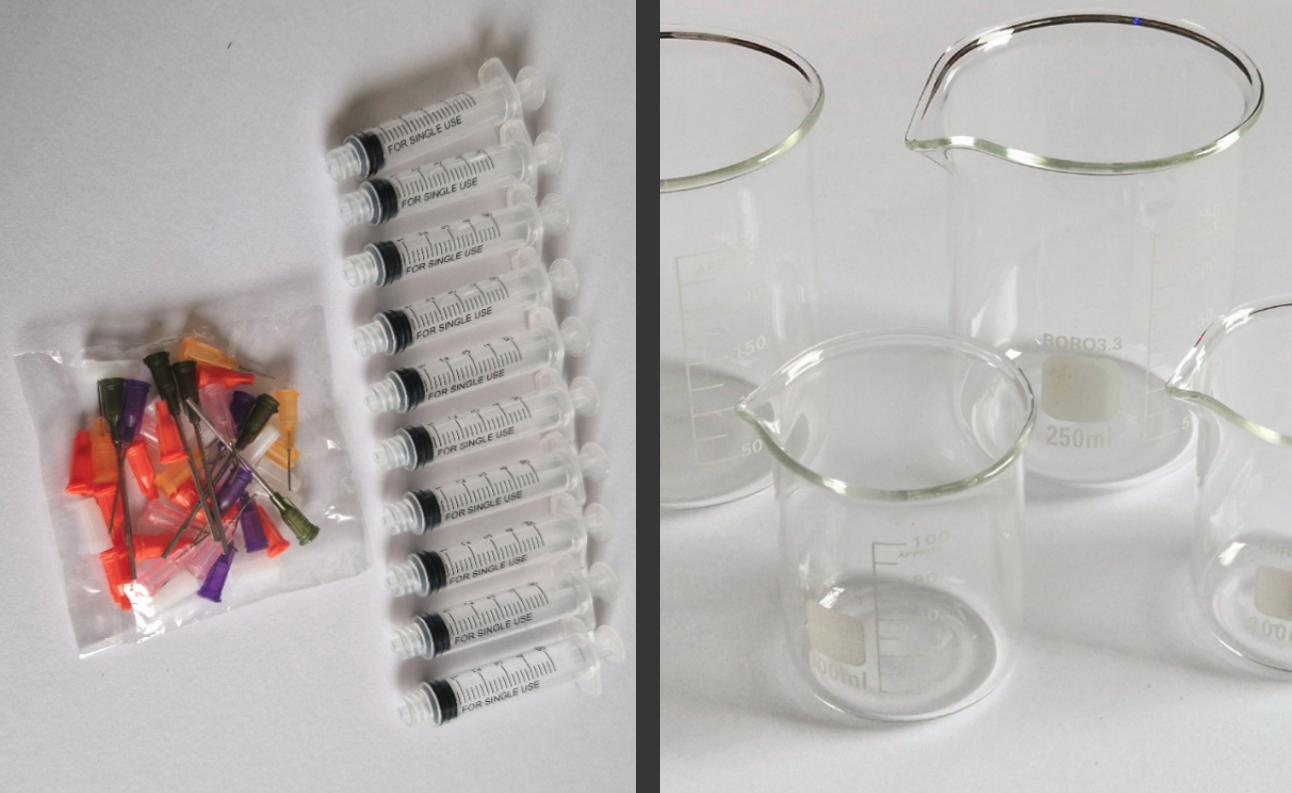
I also bought some Borate Glass graduated beakers, syringes, blunt needles and a box of 100ml sealed bottles from Amazon.
https://www.amazon.co.uk/QWORK-Graduated-Borosilicate-Science-Kitchen/dp/B09Z5XSLGD
https://www.amazon.co.uk/Octopus-plastic-bottles-flip-top-hinged/dp/B0142P2SOY
https://www.amazon.co.uk/50-Pcs-Refilling-Measuring-Applicator/dp/B09VNS6DV6
https://www.amazon.co.uk/6pcs-Small-Funnel-Stainless-Steel/dp/B0G14MPHNB
https://www.amazon.co.uk/Temperature-Resistant-Scientific-Chemistry-Laboratory/dp/B07SW27HFB
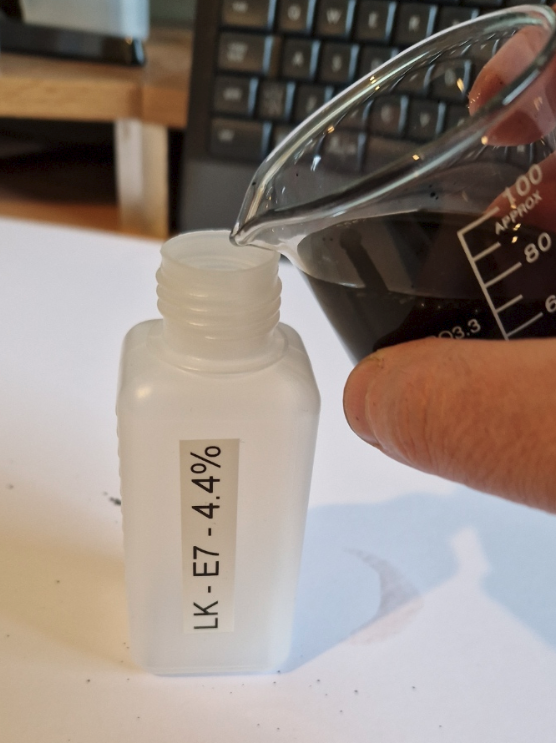
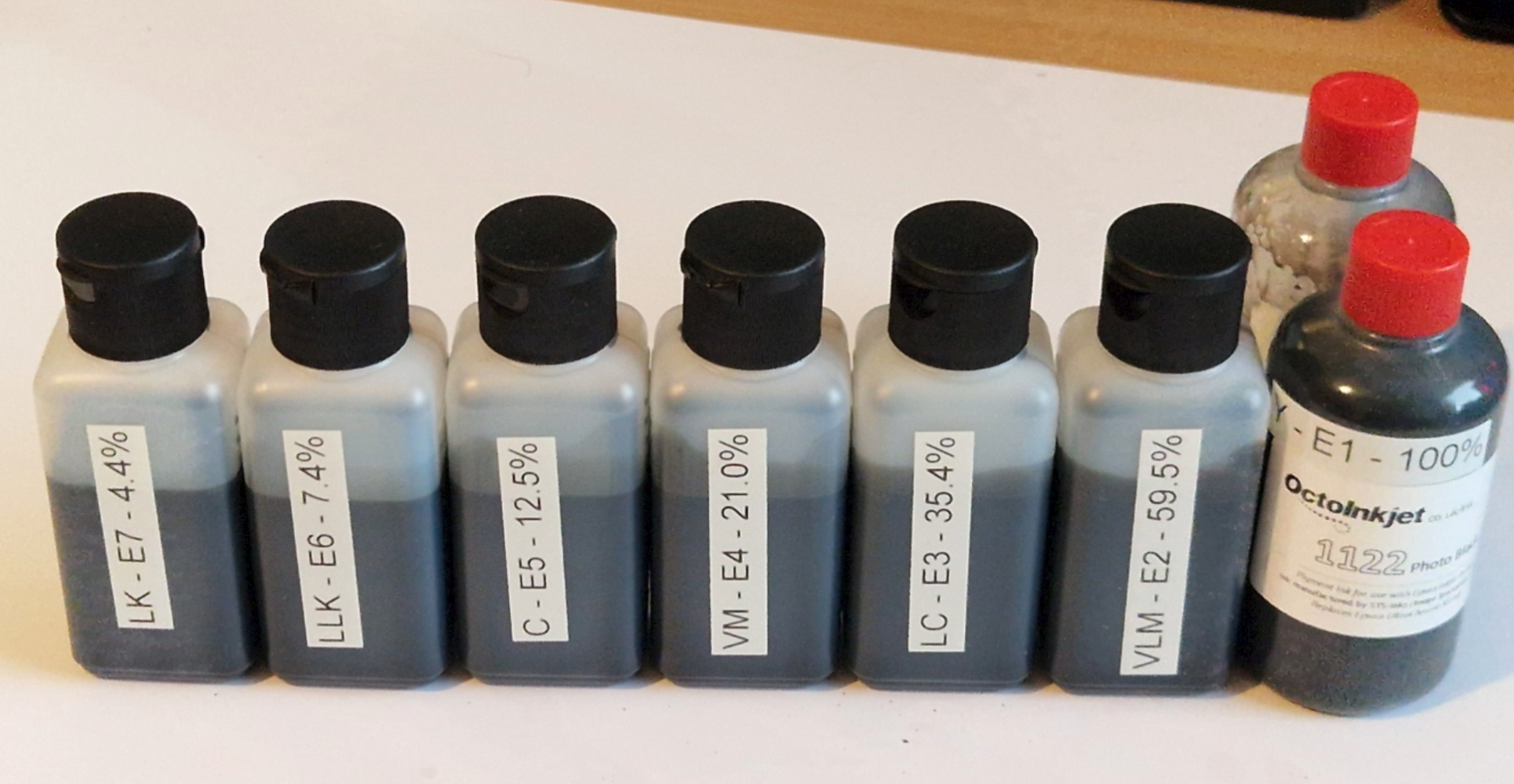
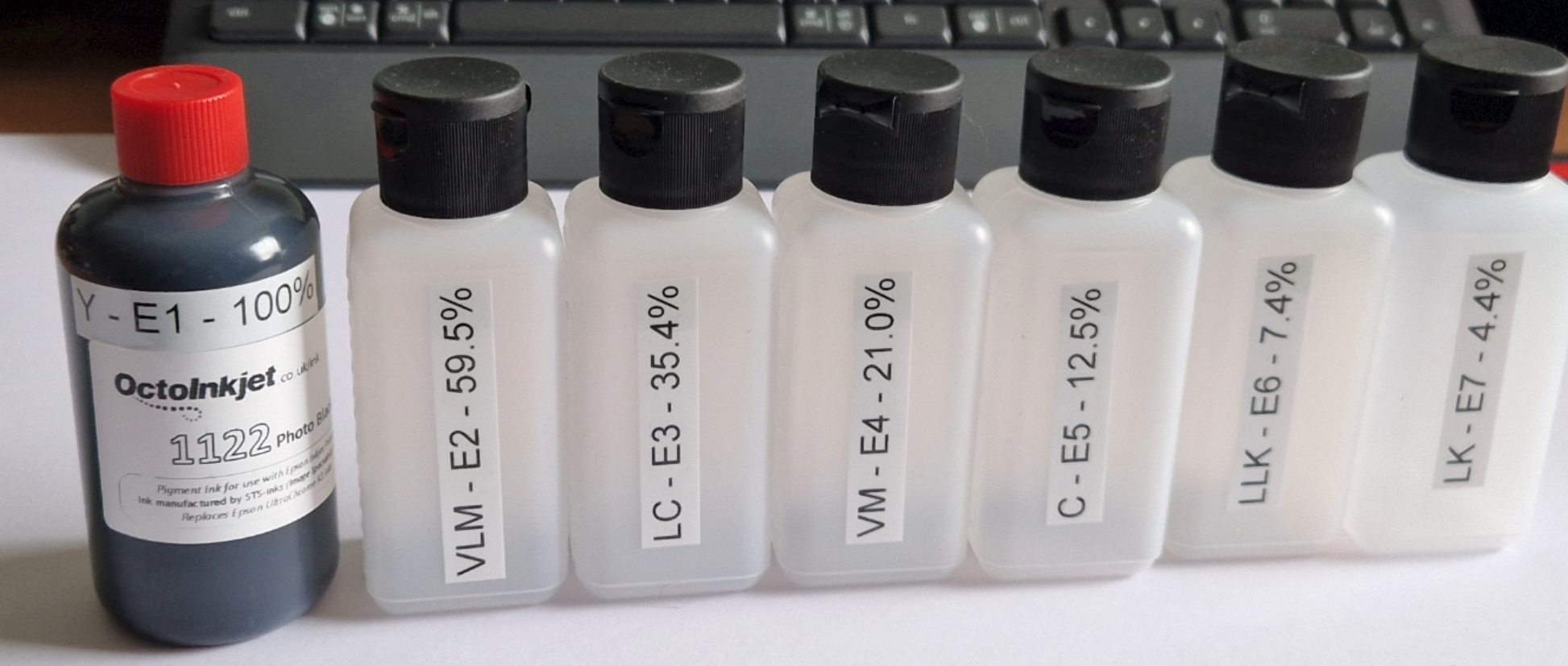
So as to not lose track of completed bottles, my first task was to make sure each bottle is labelled: from E1-100% (undiluted) to E7-4.4%
My R3880 cartridges take 70ml of mixed pigment each, so after plugging this value into my excel table, I worked out the volume of pigment and base for each mix:
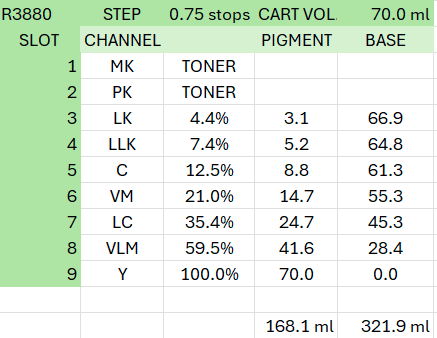
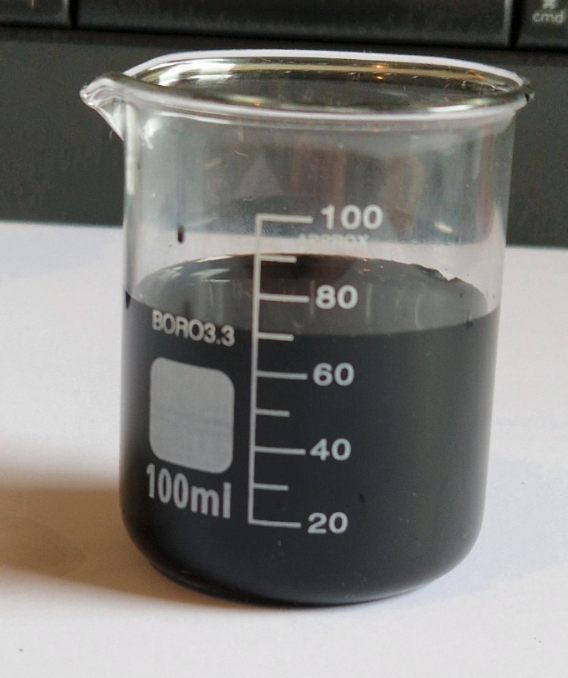
After laying out my mixing desk to prevent errors or spillages, I carefully prepared each dilution, measuring the smaller volume of pigment as accurately as possible with the syringe, then topping up to 70ml with the larger volume of base. For the 59.5%, I measured the smaller volume of base then topped up with pigment.