

Over the years my camera has become an extension of my engineering mind—every frame measured, every shadow placed, every form rendered with sculptural clarity. That approach has given me the signature style I’m known for: precise, restrained, rigorous. Yet somewhere along the way I began to sense an emotional gap. My images looked perfect—but they didn’t always feel alive.
I realized I’d trained myself to flip an internal “off” switch: it keeps me sharp under pressure and safeguards professional boundaries, but it also cuts me off from the very spark that makes photographic art resonate. Now I’m working to develop a second switch—one that invites just enough vulnerability to let bodies breathe with humanity, without sacrificing the composure that upholds trust and consent.
In this post I’ll explore how these two modes shape every decision I make—from lighting and pose to collaboration and post-production—and why finding the right balance has become the true engine of my creative vision.
Sculptural Composition & Form
I approach every shoot with an engineer’s eye for structure: the subtle counterbalance of limbs, the tension in a tilted shoulder, the way light carves a plane of muscle into shadow and highlight. Early on, I leaned hard into these principles—Golden Ratios, contrapposto, architectural props—because they guaranteed images that were technically flawless and unmistakably “me.”
But technical precision can feel cool if it’s untempered by presence. That’s where my “second switch” comes in. When I consciously allow a touch of vulnerability—whether it’s a softening of the model’s gaze or a momentary breath caught in frame—I notice the form takes on a different energy. Suddenly a curve isn’t just geometry; it becomes a gesture that invites someone into the image.


In practice, this means planning lighting setups that can do double duty: defining crisp edges for structural clarity, then subtly modulating intensity or color to suggest warmth. It also means giving the model room to improvise—a tilt of the head here, an arch of the back there—so the pose feels collaborative rather than prescribed. The result is a sculptural composition that still honors precision but pulses with the life only genuine connection can bring.
Collaboration & Trust
True collaboration begins long before the shutter clicks. I treat every model as a creative partner, not a subject. That means clearly communicating the shoot’s intent—mood, form, narrative—and outlining technical details like lighting style or props. But just as importantly, I carve out space for the model’s ideas, questions and boundaries. This dual approach—the engineer’s blueprint alongside a humanistic dialogue—builds the mutual respect that turns a posed situation into a shared exploration.
Trust is the foundation that lets vulnerability emerge in the frame. When a model knows I’ve thought through consent, safety and professional boundaries, they’re free to bring their own emotional presence. In practice, I’ll pause mid-shoot to check in: “How does this feel? Want to try something different?” Those moments of real-time feedback become opportunities to flip my “second switch,” inviting authenticity without losing the composure that protects us both.
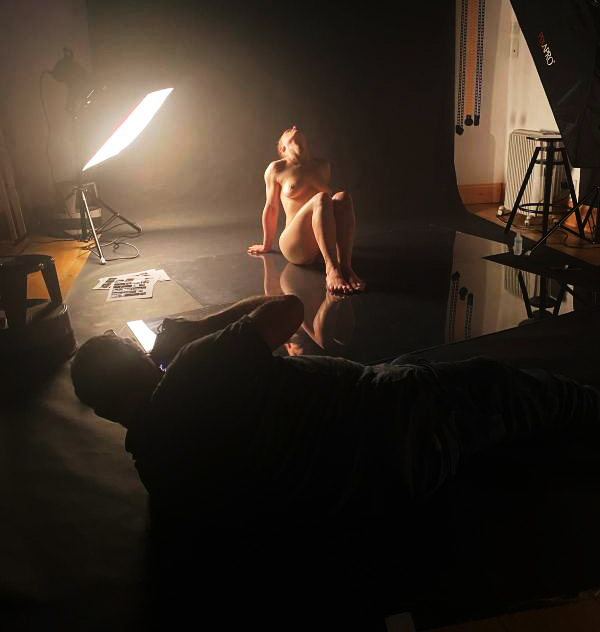

Over time, this collaborative process yields images that feel alive. Rather than perfectly static portraits, you see gestures and glances that speak of genuine connection. The form remains sculptural—but it breathes. By balancing clear technical direction with empathetic engagement, I create work that honors both precision and presence, and celebrates the trust at the heart of every powerful photograph.
Pushing Boundaries While Honoring Tradition
I’ve always believed that innovation grows from a solid foundation. My work is rooted in centuries of sculptural and photographic practice—contrapposto from Renaissance masters, chiaroscuro from Baroque painters, the formal rigor of early fine-art nude pioneers. These traditions taught me the power of form, balance and light as visual language.
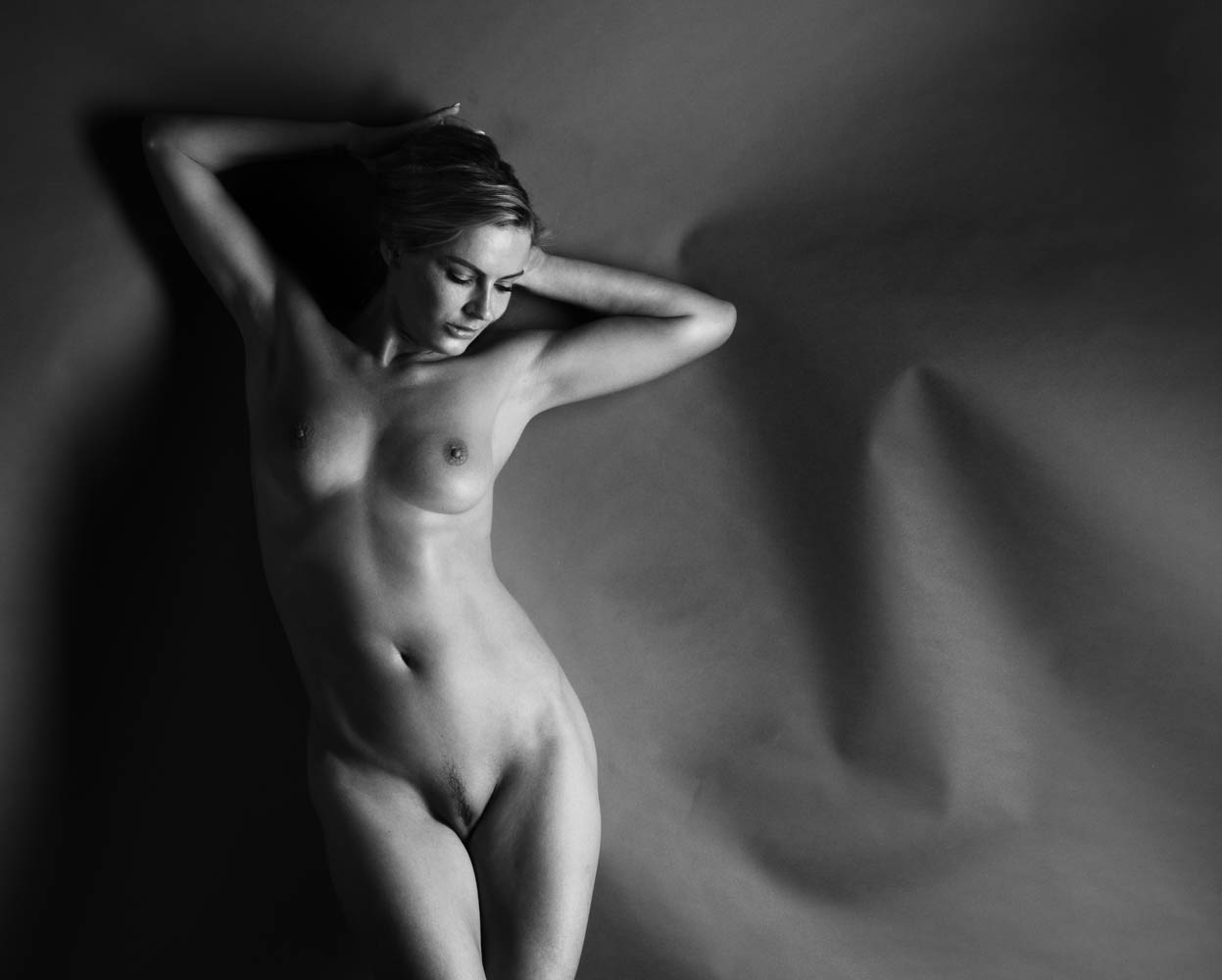
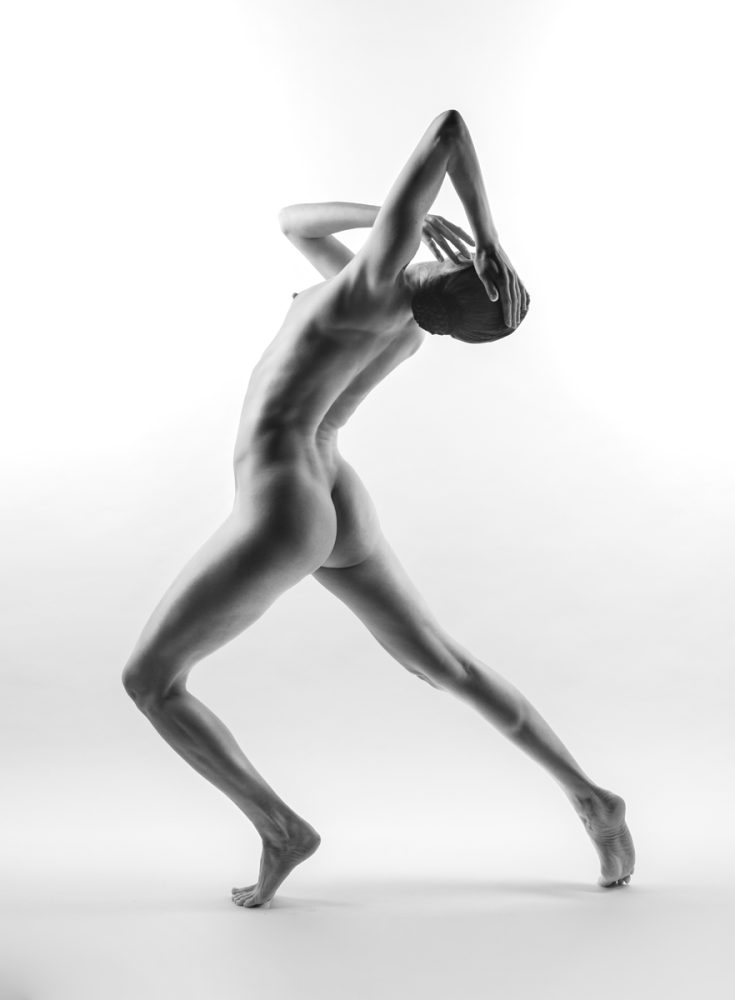
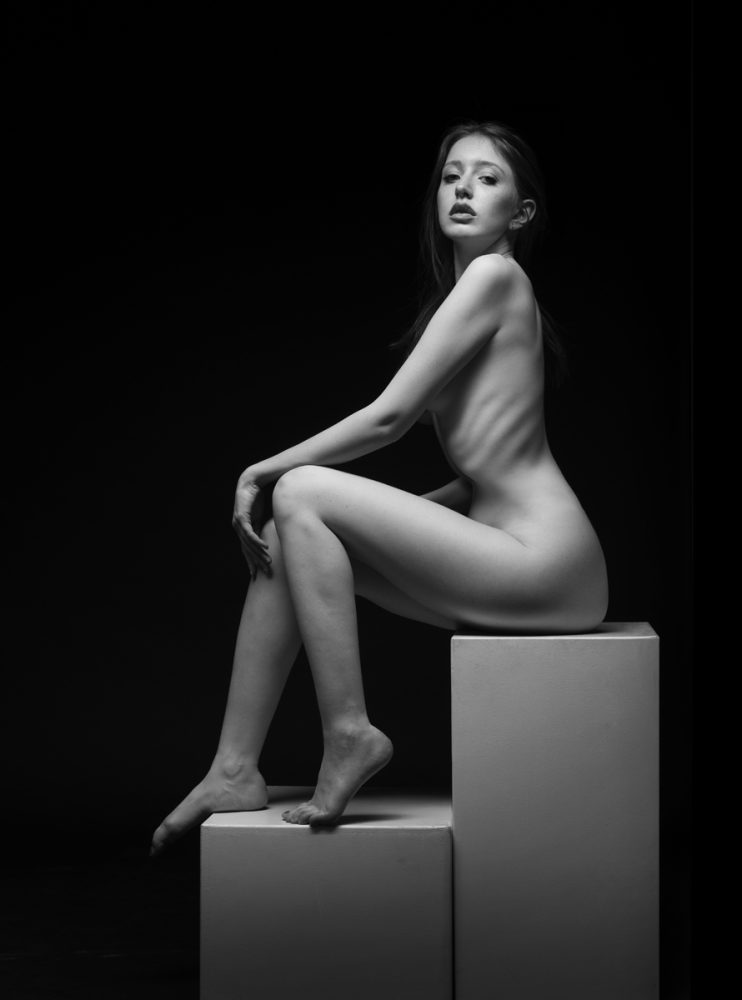
But tradition alone can feel prescriptive. To push past the expected, I introduce subtle ruptures: a flash of color in a monochrome study, a transparent drape hinting at movement, a hand-brushed textural element in post-production. Each experiment is a conversation with the past—asking “What happens if we shift the shadow just so?” or “How does this contrapposto hold up when the model tilts forward?”
Crucially, these playful deviations don’t come at the expense of respect. Before I tweak any classical principle, I revisit my “Mode 1” standards: clear consent, thoughtful planning, technical precision. Then I flip my “second switch,” inviting just enough surprise—an unguarded glance or a slight motion—to remind both model and viewer that art lives in that tension between reverence and risk. The result is work that feels both timeless and startlingly new.