

Fine art nude photography is often most powerful when focused on its basic elements, where light, composition, and the human form take center stage. In a world full of elaborate setups and intricate details, minimalism brings a refreshing clarity. It allows emotion, shape, and presence to shine on their own.
Why Minimalism Matters in Nude Photography
Minimalism doesn’t mean a lack of detail; it emphasizes intentional simplicity. By eliminating distractions, viewers can engage more closely with the subject. Each curve, shadow, and movement carries significance, creating an emotional connection that might get lost in complex compositions.


In my work, I notice that removing extra elements enhances the sculptural quality of the human body. With fewer components, the relationship between light, form, and texture becomes more impactful.
Harnessing Negative Space for Impact
Negative space, the empty areas within a frame, plays a vital role in minimalist nude photography. It creates compositional balance, directing the viewer’s eye toward the subject while emphasizing isolation, presence, or vulnerability.
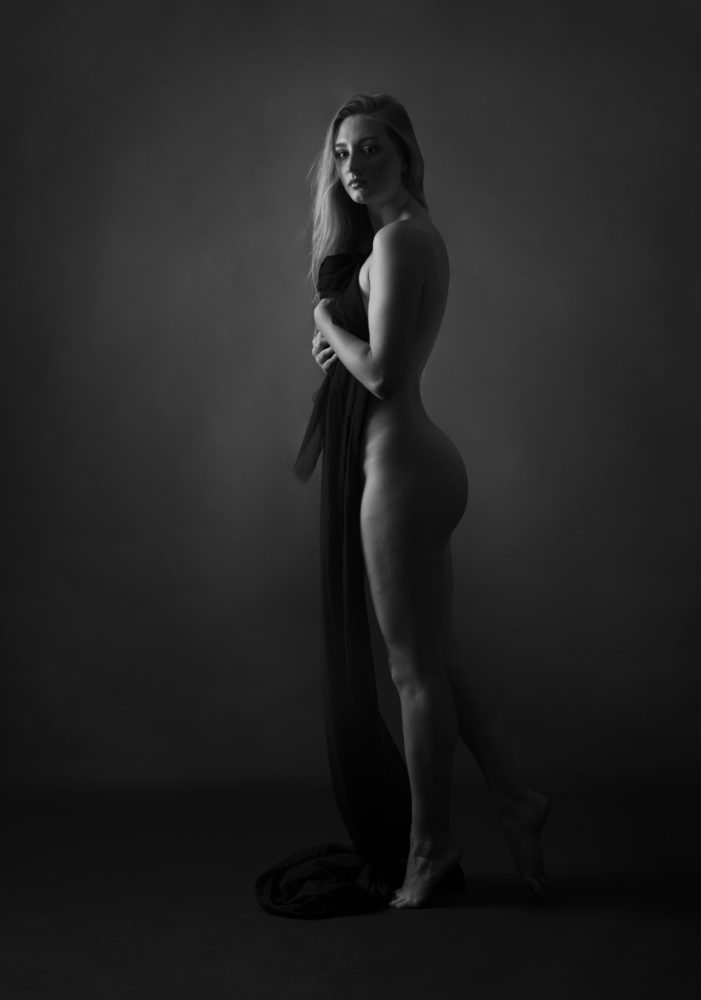


When the model is surrounded by expansive negative space, the image takes on a meditative quality. It encourages contemplation and lets the simplicity of the form remain the focus. The absence of clutter is not just visual; it also affects how the viewer perceives depth and meaning.
Lighting Minimalism: Soft vs. Stark
Light in minimal compositions acts as both sculptor and storyteller.
- Soft, natural light brings out subtle tonal shifts, creating a gentle glow that accentuates organic lines. It suggests quiet intimacy and timeless elegance.
- Harsh, directional light creates bold contrast, enhancing shadows and precisely defining contours. It emphasizes strength, structure, and dramatic tension.
Each approach sets a different mood, and choosing one over the other depends on the story being told. In minimalist fine art nude photography, light itself becomes a significant force, shaping the image as much as the subject.
Minimalism in Props and Styling
Props in minimalist nude photography are rarely decorative; they enhance the subject instead of competing with it. A simple chair, draped fabric, or an architectural frame can adjust the image’s balance without complicating it.
In “Draped in Light – The White Shirt,” for example, the shirt acts as an extension of the body, subtly influencing the composition while preserving the purity of the nude form. Similarly, in “Sculptural Shapes,” minimal structuring lets the model’s pose and lighting shape the aesthetic, showing that sometimes the most striking compositions are the simplest.
Stripping Back to Essentials in My Work
Minimalism is not just a style; it’s a philosophy. It questions the idea that fine art nude photography must be complex to be compelling. Instead, it values space, quietness, and precision to create images that communicate clearly.
As I refine my own projects, I keep returning to the concept that less is more. Whether through stark lighting, thoughtful framing, or subtle textures, returning to essentials reveals the purity of the human form.