

Aaarghh!
This fine art mono inkset malarkey is really starting to take its toll on me. Initially, I was sure that I could turn this around in a couple of weekends, but here I am MONTHS after starting, with a set of mixed inks, a £300 hole in my bank balance and a partially dismantled Epson. I’m hoping what I’m performing is intensive care rather than a post-mortem, but the story really is pretty ugly.
I’m sure you’ve been reading the last few articles, discussing my project to convert my Epson R3880 into a fully monochrome, pure carbon fine art printer. As to the reason for doing this, my disability is definitely more about me being less of a “why” character than a “why not” character. Its my engineering mindset I guess. I just love to try new things – complicated things. I actively seek out new “engineering adventures”, but maybe this particular adventure takes me a little bit farther off the path than even I am comfortable with.
It started when a friend of mine had replaced her ageing Epson R3880 printer with something newer and was disposing of her old printer. Id been interested in printing fine art mono for years and thought this might be a great opportunity for me to get a full-carbon monochrome system up and running relatively cheaply.
After doing some research online, and noting that Piezography K7 was way out of my budget or even my physical reach, as it would need to be imported. A full set would have cost upwards of £800 by the time I got it, and that was without any of the other hardware such as refillable carts etc. More research pointed me towards Paul Roark’s articles about Eboni inks and his custom mixed Eboni-4 and Eboni-6 sets. Again, premixed sets were available – but not in Europe. What WAS available in Europe was a small company named Octoinkjet, who sold the Base-pigment components allowing me to mix my own dilutions. Thankfully Octoinkjet also managed to source me a set of refillable cartridges relatively cheaply, so with the planets aligned, I bit the bullet.
The componenets sat on my shelf for a month or two while other priorities took precedence, but getting back to it, I bought a bottle of flushing solution, and a bunch of beakers, syringes, pipettes and funnels and prepared myself for my first chemistry lesson in about 3 decades.
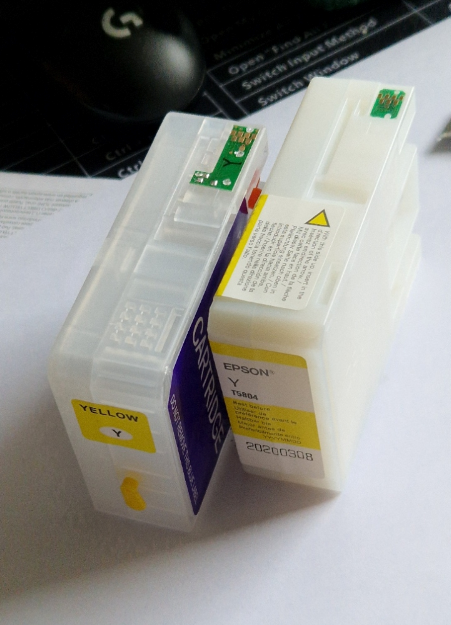
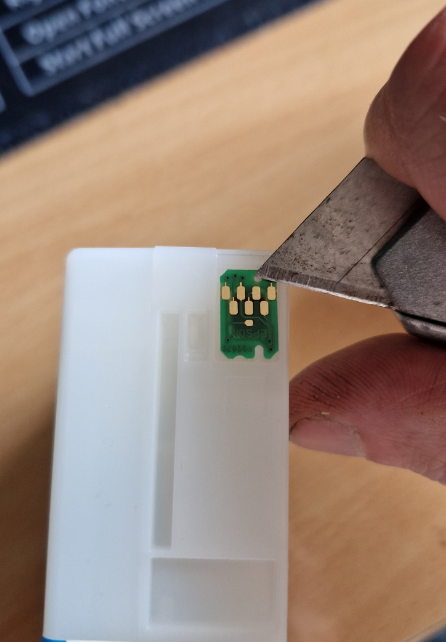
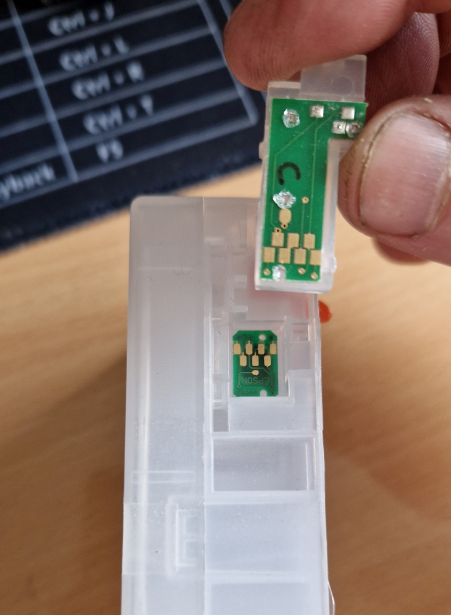
Thankfully, ever since I bought my original R3880 printer, I have been hoarding the empty cartridges, and thankfully, most were not reporting FULLY empty, so their OEM chips could be donated to the project, for use under the refillable cartridges piggyback ARC chips.
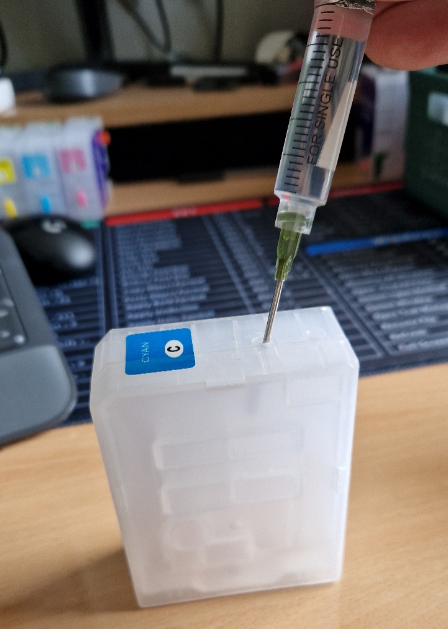
I salvaged a full set of OEM chips and installed them into my new refillable carts. Then I loaded them with about 15ml of cleaning solution into each, and installed them into the printer:
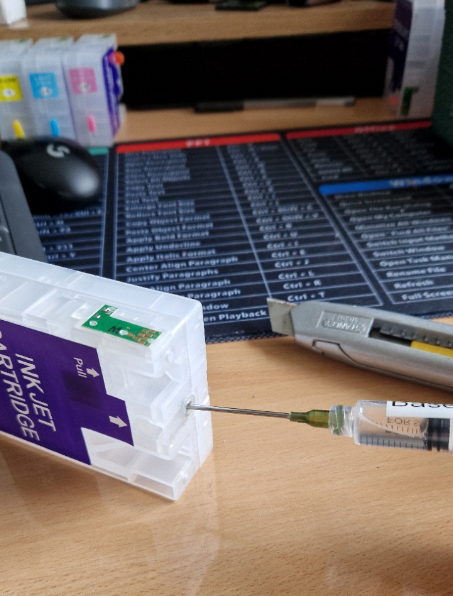
Problem #1: Cyan, Magenta and Light Magenta channels are reporting problems – sadface 🙁
Annoyed at the setback, I moved into troubleshooting mode, finding and fixing a stuck pin on the Cyan ARC chip. That channel was sorted, but the M and LM channels evaded me. Nothing I did could bring them back to life. After some more research, I twigged that these two channels were the only two that used different OEM ink between the 3800 and 3880 models, and that this set was being sold as compatible with both the 3800 and the 3880. As it turned out, the kit was ONLY compatible with the 3800, and NOT my 3880, although the supplier didn’t seem to be aware of the differences. They generously sent me two replacement cartridges, but both were labelled M and LM – suggesting they were still only compatible with the 3800, and NOT the 3880’s VM & VLM.
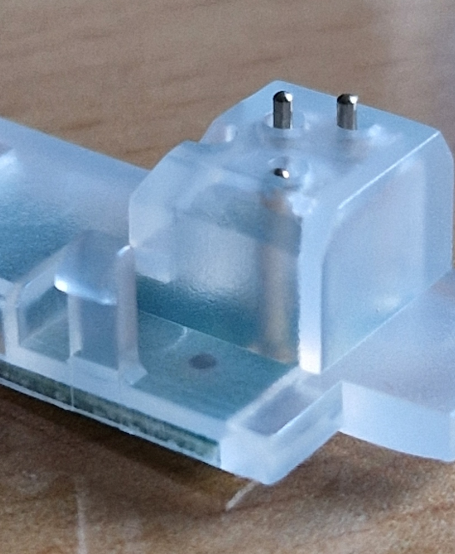
Problem #2: Unfortunately, the supplier didn’t have any VM & VLM 3880-specific chips they could send me, so I am reduced to sourcing these chips elsewhere.
I can see that InkjetMall in the US sells individual chips, but again VM & VLM are out of stock – likely out of production given the age of the printer. I can buy a pair of 3880 VM and VLM full cartridges, including ARC chips, but that will set me back £80 in shipping alone! Instead, I see that AliExpress in China sells FULL SETS of ARC chips, for the 3880, for around £30, so that’s a no brainer. I order a set, but there’s around a 2 week transit time before they arrive in the UK.
When the ARC ships arrived from China, two weeks later, I’m super-keen to get things moving, and quickly swap out the first one – VLM. Great! it springs into life.
Problem #3: VM on the other hand is still dead – even with the new chip.
Not a happy bunny, as you can imagine. Thankfully, AliExpress are receptive to the fault and send me a replacement VM chip the next day. Of course, it still takes another two weeks to arrive.
Problem #4: After what felt like forever, finally I get the replacement VM chip in place and… nada. Still dead.
At this stage, I’m ready to throw the towel in, but that’s a decent chunk of change to throw away with little chance of recovering any of it. I’m looking at other potential sources for VM chips in the Netherlands and Germany, but neither respond to my emails. One last ditch email to Marrutt in the UK comes up trumps though. a “Might you have one in a drawer somewhere” email, resulted in a helpful link to their retail website, showing all 3880 ARC chips available to order! Result!!!
This time, I’m taking no chances. At £4 each, I order four VMs and four VLMs – just in case. I got my refund from AliExpress, so that covered the replacement ARC ships from Marrutt. I received them the very next day, and was pleased to see the pins on them were much longer – generally a much better build quality than both the chips from Octoinkjet and the chips from China. With bible-in-hand I installed the VM chip, and FINALLY, the printer is awake, and reporting no errors!
That weekend I took the day to make sure all channels were flushed of all their Ultrachrome inks. I created an A4 solid black TIFF and loaded up QuadToneRip. Some channels ran clear in one or two pages, while others took 8 or 9 – which was weird, but the colour had gone anyway and I figure the blank pages were testament that all I’m getting now is clear flush. I ran a couple of blank pages on each channel just to make sure there was no colour left.
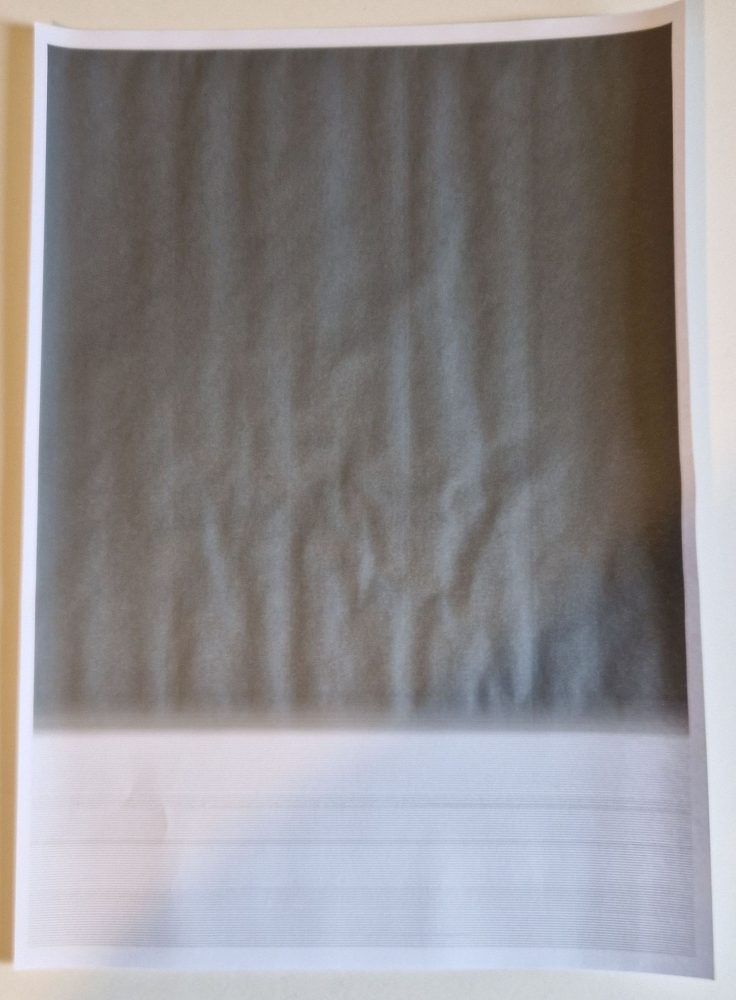
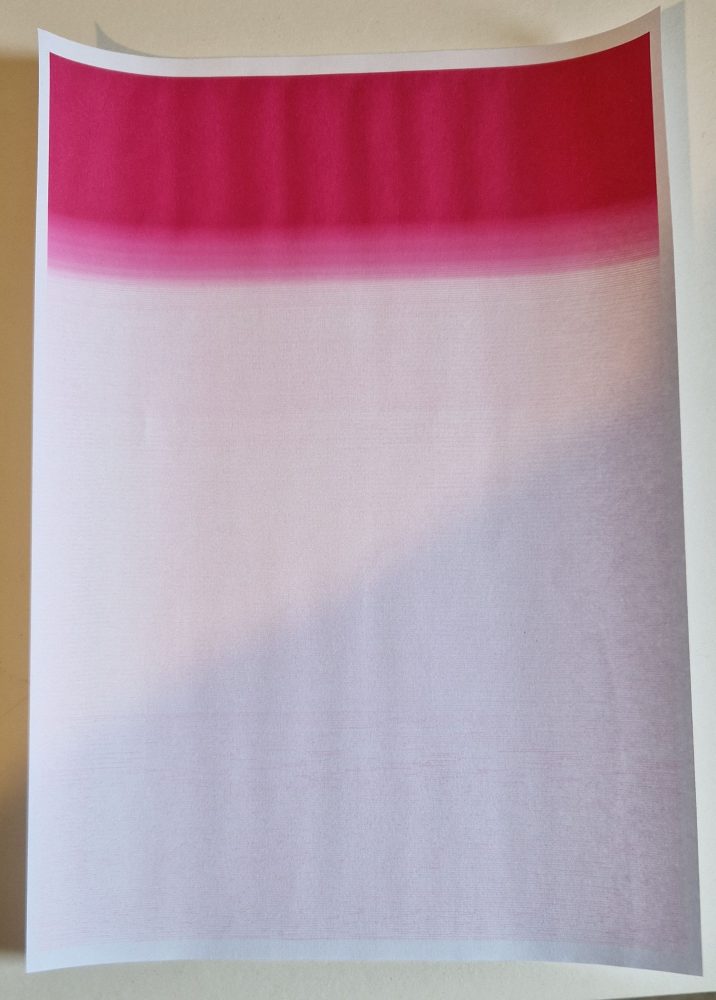

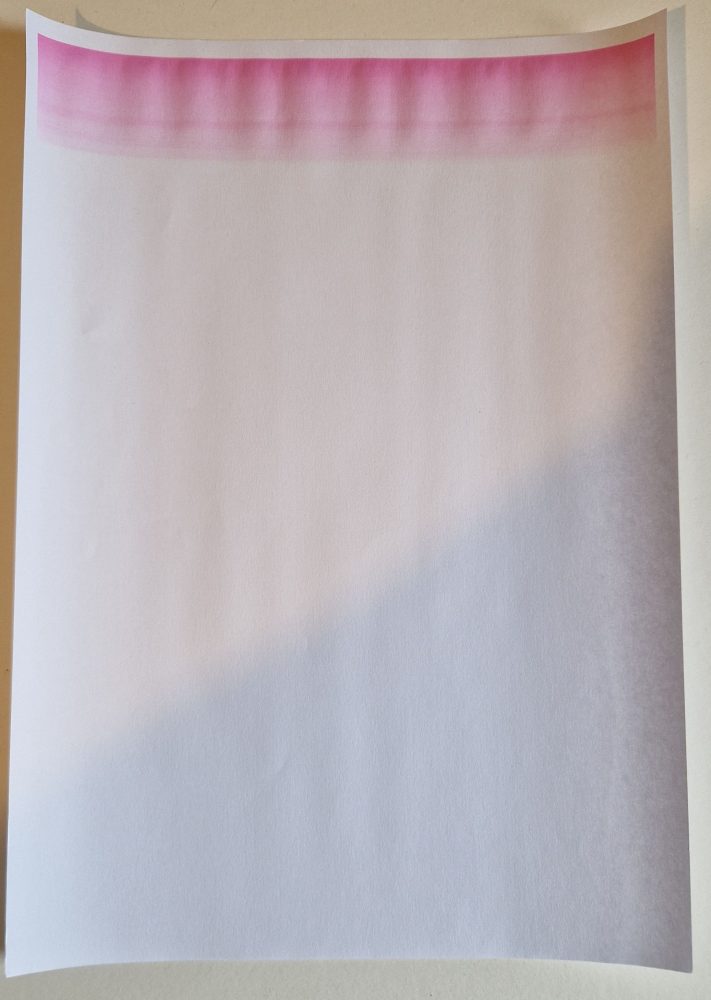
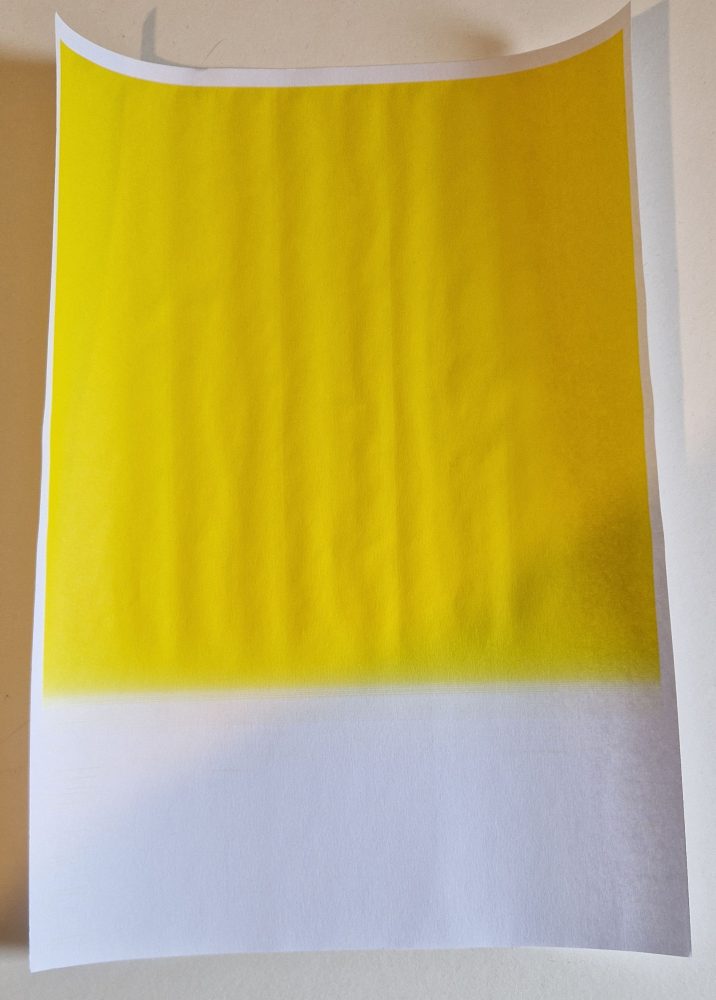
There wasn’t much flush left in the carts afterwards, but what was left was emptied out.
Time to make up my custom inkset.
I had been able to source Eboni pigment in 125ml bottles, within the UK, from Martin at OctoInkjet, along with the Base fluid with which to create my dilutions, and the refillable cartridges to fit my Epson R3880.
https://www.octoink.co.uk/products/Epson-Compatible-Pigment-Ink-%252d-Black.html
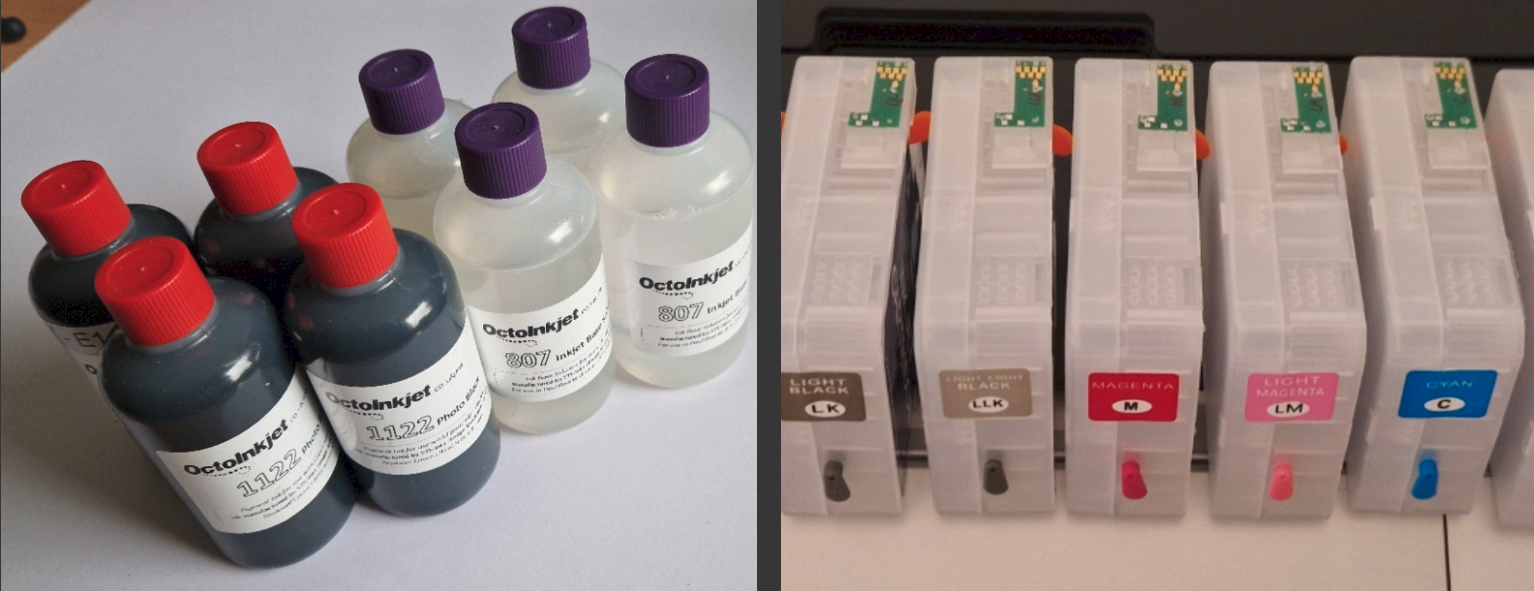
I also bought some Borate Glass graduated beakers, syringes, blunt needles and a box of 100ml sealed bottles from Amazon.
https://www.amazon.co.uk/QWORK-Graduated-Borosilicate-Science-Kitchen/dp/B09Z5XSLGD
https://www.amazon.co.uk/Octopus-plastic-bottles-flip-top-hinged/dp/B0142P2SOY
https://www.amazon.co.uk/50-Pcs-Refilling-Measuring-Applicator/dp/B09VNS6DV6
https://www.amazon.co.uk/6pcs-Small-Funnel-Stainless-Steel/dp/B0G14MPHNB
https://www.amazon.co.uk/Temperature-Resistant-Scientific-Chemistry-Laboratory/dp/B07SW27HFB
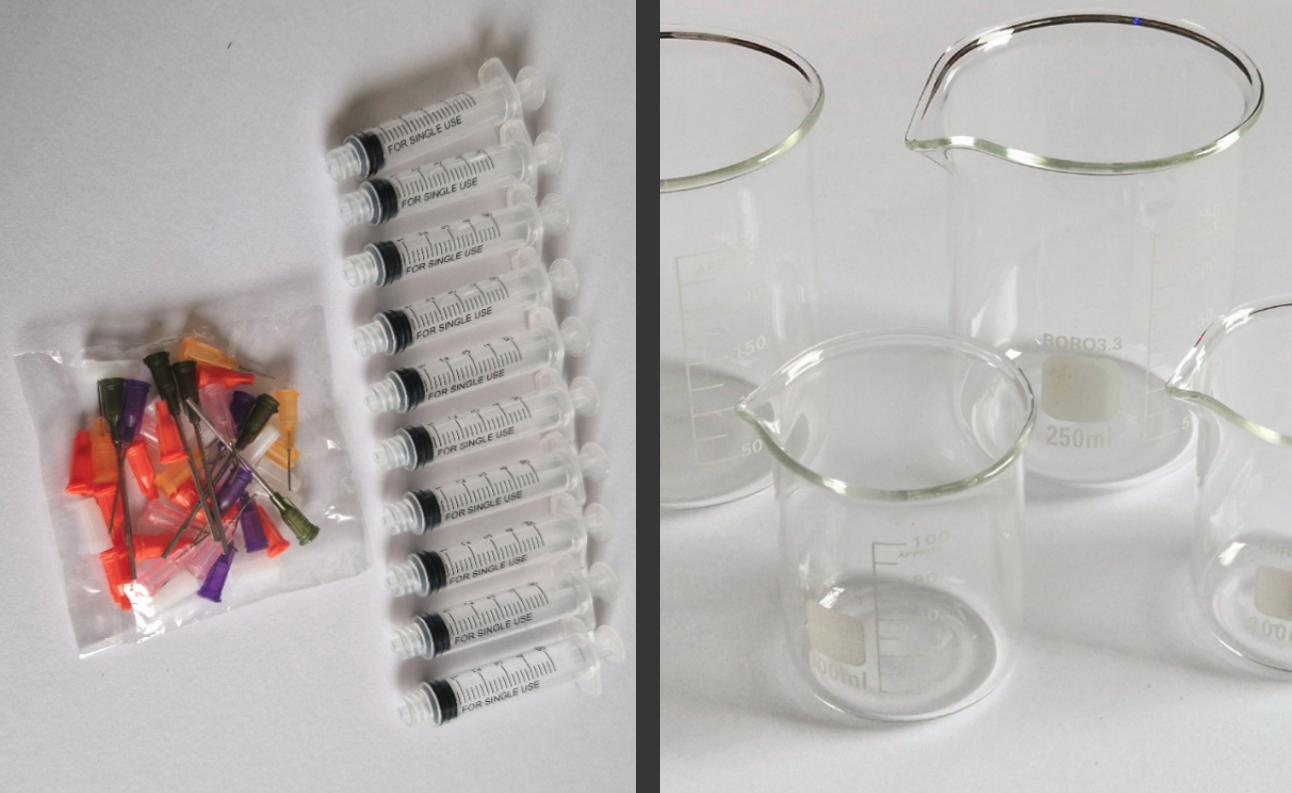
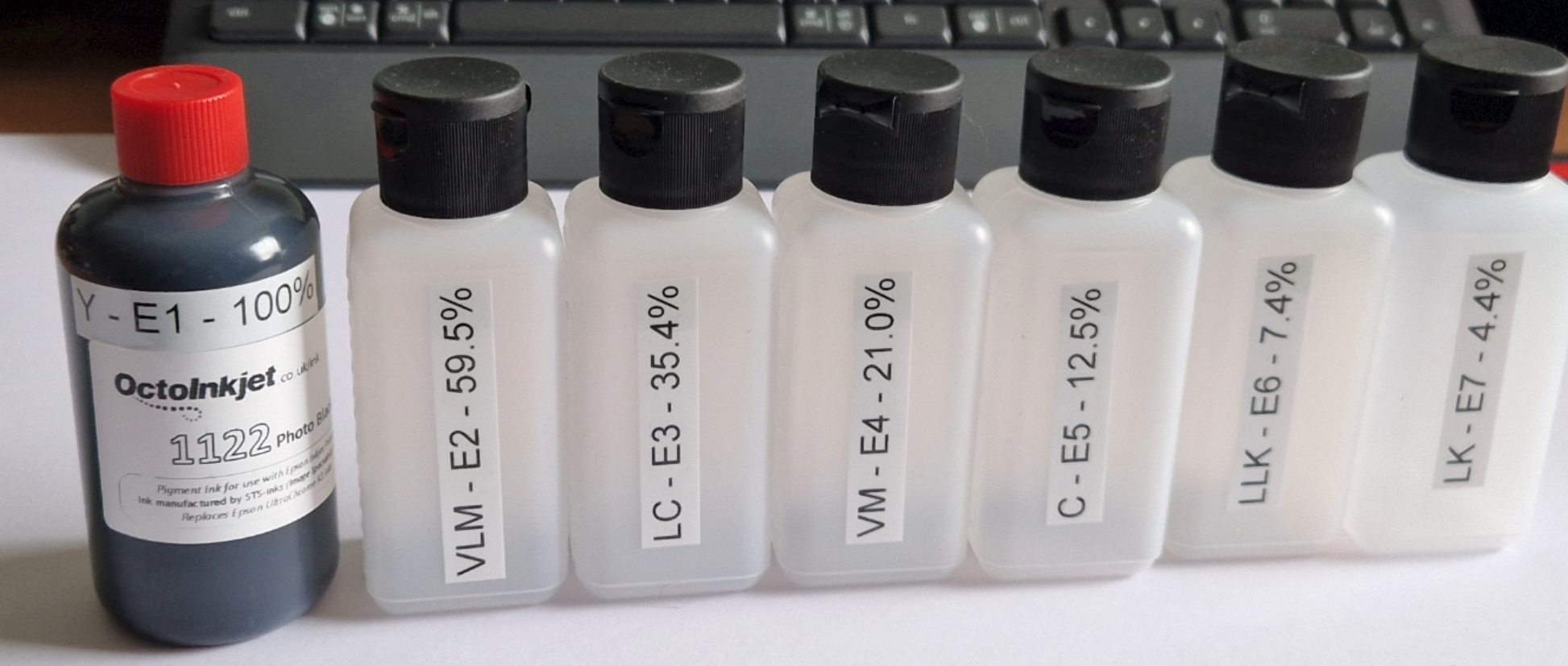
So as to not lose track of completed bottles, my first task was to make sure each bottle is labelled: from E1-100% (undiluted) to E7-4.4%
My R3880 cartridges take 70ml of mixed pigment each, so after plugging this value into my excel table, I worked out the volume of pigment and base for each mix:
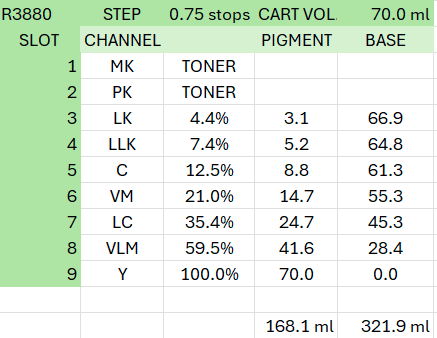
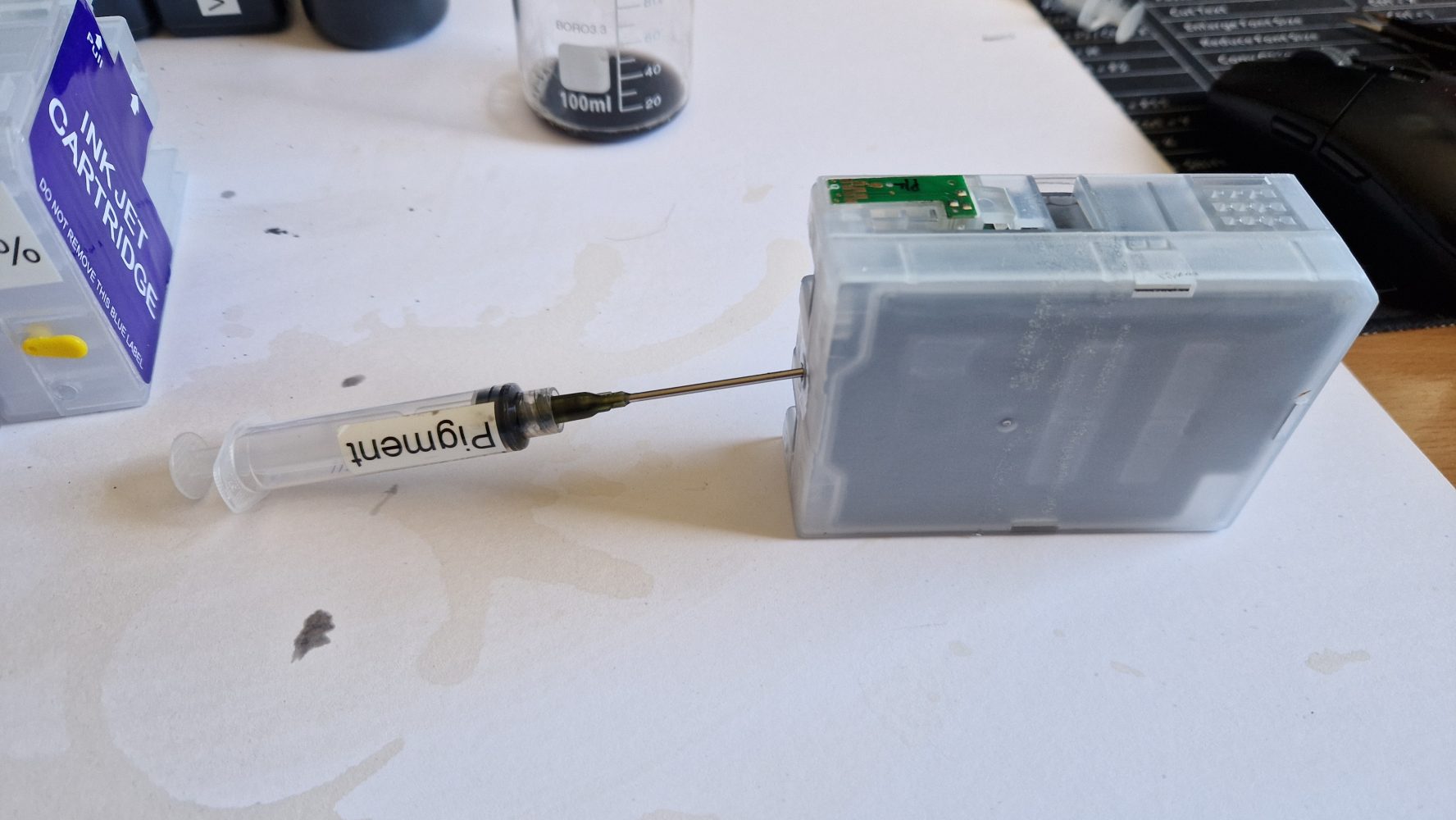
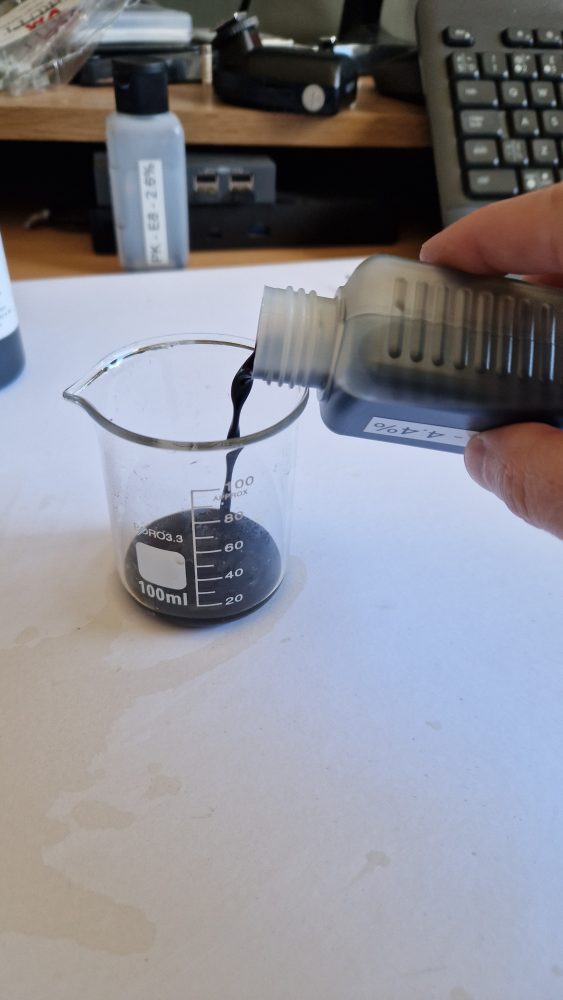
After laying out my mixing desk to prevent errors or spillages, I carefully prepared each dilution, measuring the smaller volume of pigment as accurately as possible with the syringe, then topping up to 70ml with the larger volume of base. For the 59.5%, I measured the smaller volume of base then topped up with pigment.
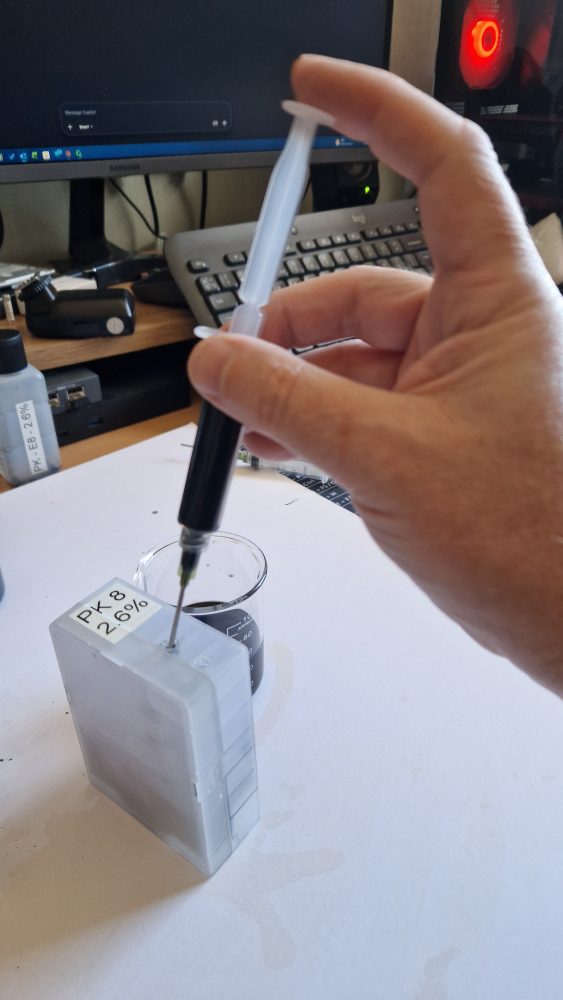
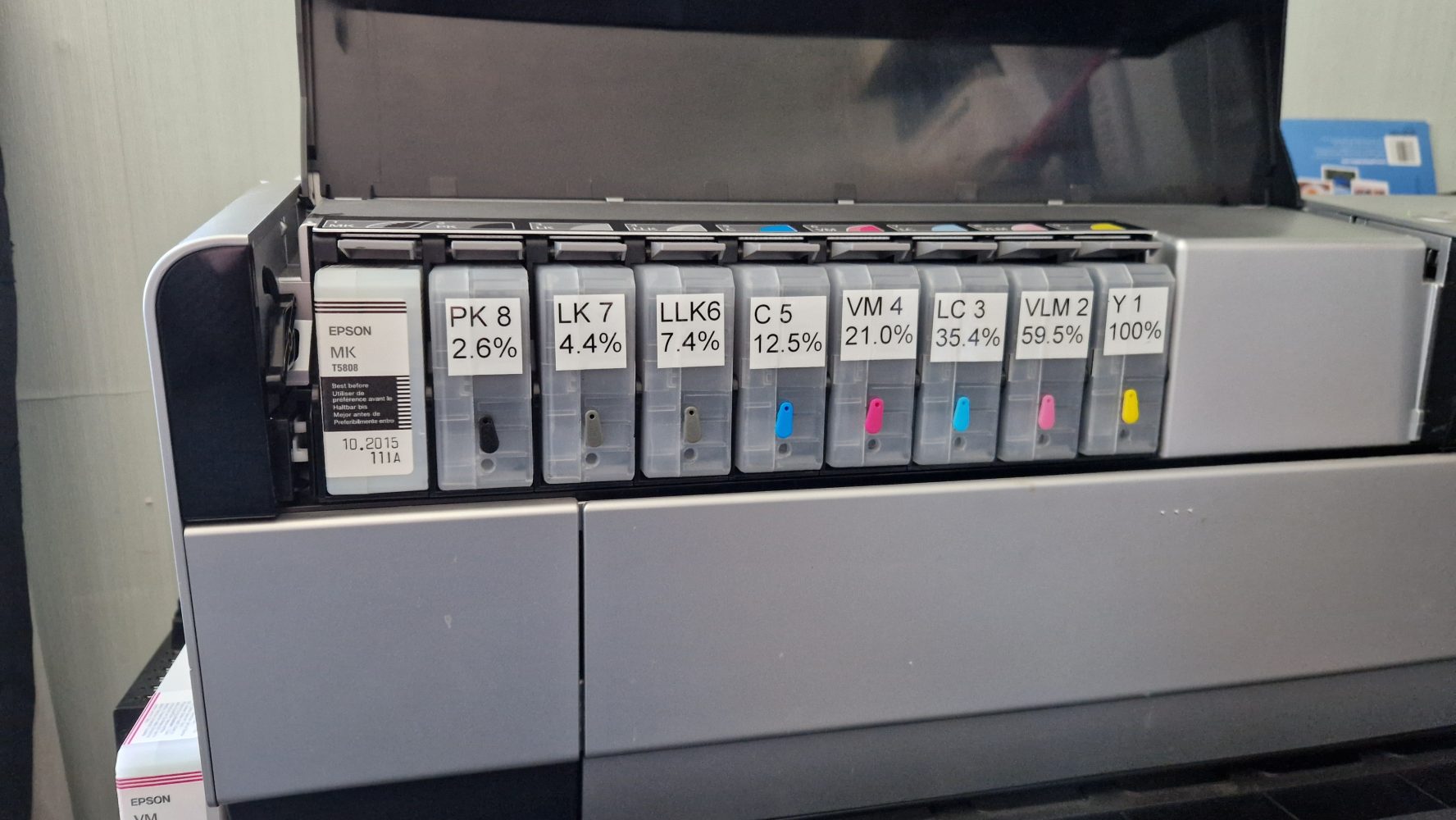
Having mixed the 7-ink set, I decided to add one more “Ultralight” ink at 2.6% into the PK channel, to align with Paul Roark’s & John Cone’s highlight tone.
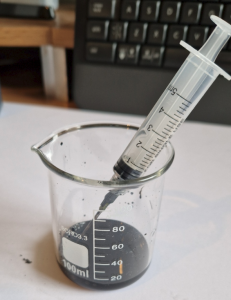
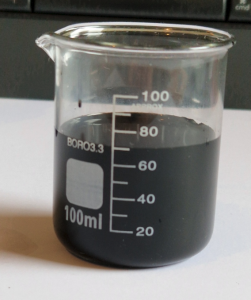
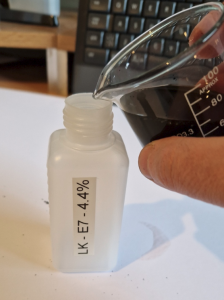
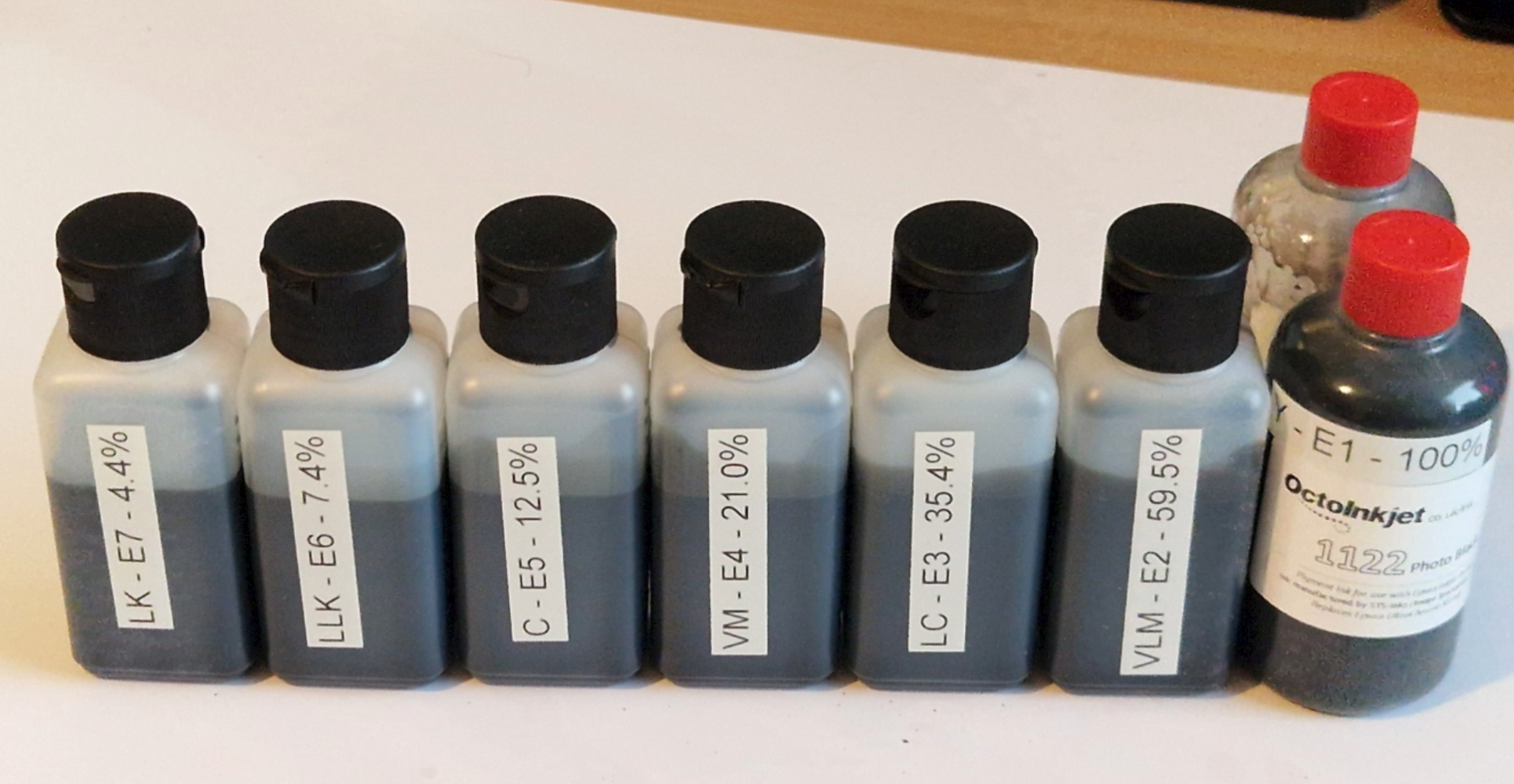
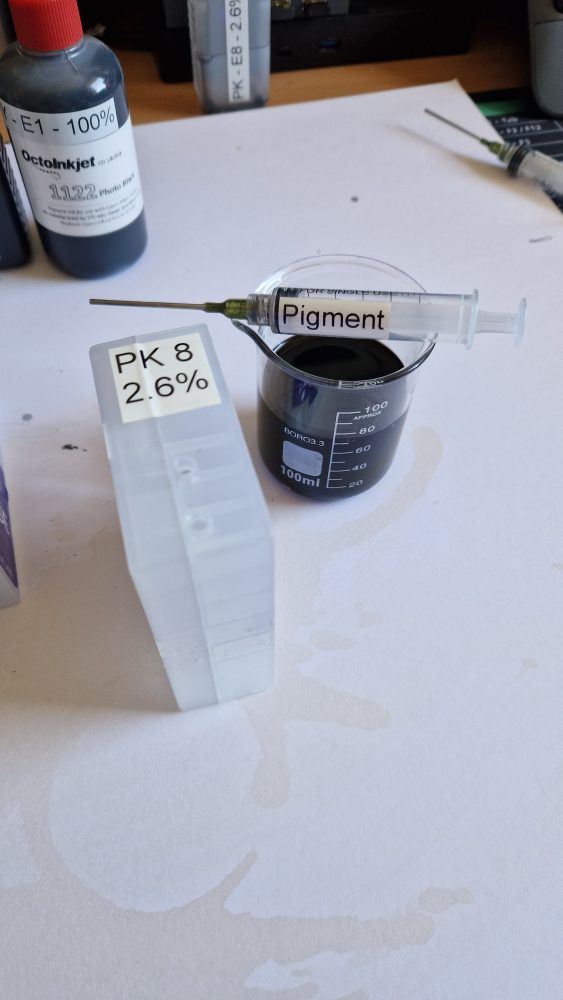
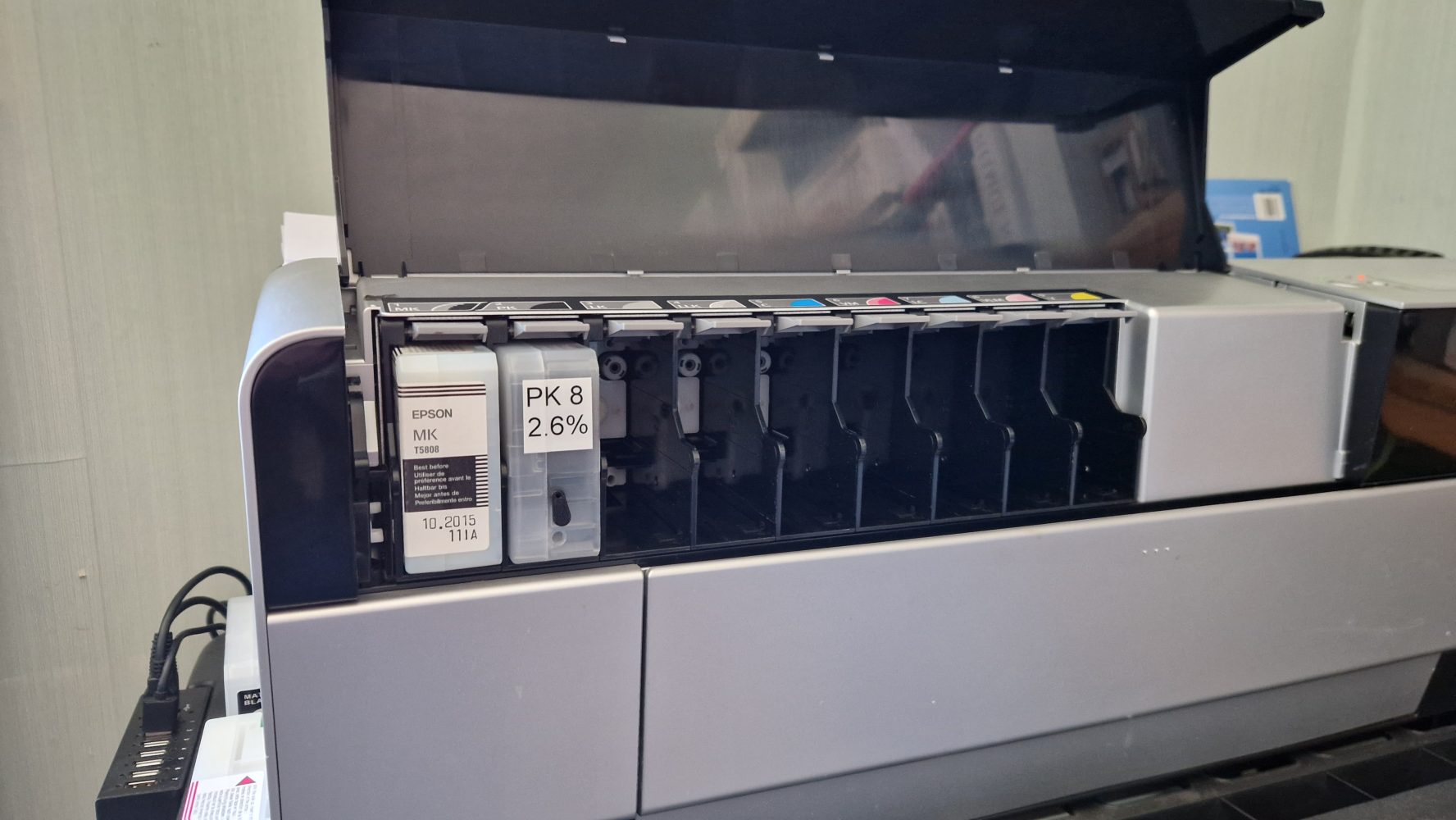
Loading the carts with the new inkset, I proudly installed them into the printer. “Here we go!”
Expecting to see various shades of grey, I ran blank sheets through the printer, one after the other.
Problem #5: Nothing. 5 sheets gone, 10, 15 sheets. None of the channels were printing ANYTHING!
Sheet after sheet of blank paper spouting from the printer. This has to be the end, surely, and this is where I am sitting right now – not sure which way to turn. My guess is that I inadvertently ran each channel DRY during the flushing cycle. Yes, there was a period of “lighter colour” on each channel, seen above, which I figured was the channel “cleaning out”, and that the white was fully clean – but I suspect the white paper was simply the point at which the channel ran dry of flush.
The 3880 uses a positive pressure air pump to maintain pressure in the ink cart, but if the flush fluid level dropped below the prime chamber intake, then the pump will just be blowing air through the lines! A hard lesson to learn!
I have tried reinstalling OEM cartridges, cleans, power-cleans, chimney-sweeps and all, but ironically, I have only managed to recover the Magenta channel. The rest are not priming at all.
Problem #6: So now I have a printer with airlocked lines & dampers and no easy way to reprime them.
I have spoken with the service agent in Perth, who advises they would need to reprime it using OEM inks, which would be costly and time consuming. Then there’s the hassle of transporting a printer from Aberdeen to Perth and back.
So now I am faced with the prospect of opening up this printer myself, and trying to fix this damper airlock by drawing ink or flush though each channel from the Damper end – something I never intended to get involved with. There are a couple of youtube videos on damper replacement, so that might be an interesting project over the next few weeks. Watch this space!
Right now the printer is sitting on my bench, looking at me forlornly, asking me why I would torture it in this way, and I have no answers. Let my pain be your lesson:
“THIS IS WHY WE MUST NEVER ALLOW CIS OR REFILLABLE CARTRIDGES TO RUN DRY – OR EVEN LOW!”
Next project once I get this to work, might be to build an early warning system for my 3880 that flags real low ink levels at 25% or so.