

Fine art nude photography is not just about capturing movement. It’s about shaping form using light, shadow, and careful composition. Like classical sculptors carving marble, photographers use deliberate posing and strategic lighting to create a three-dimensional presence within a flat image.


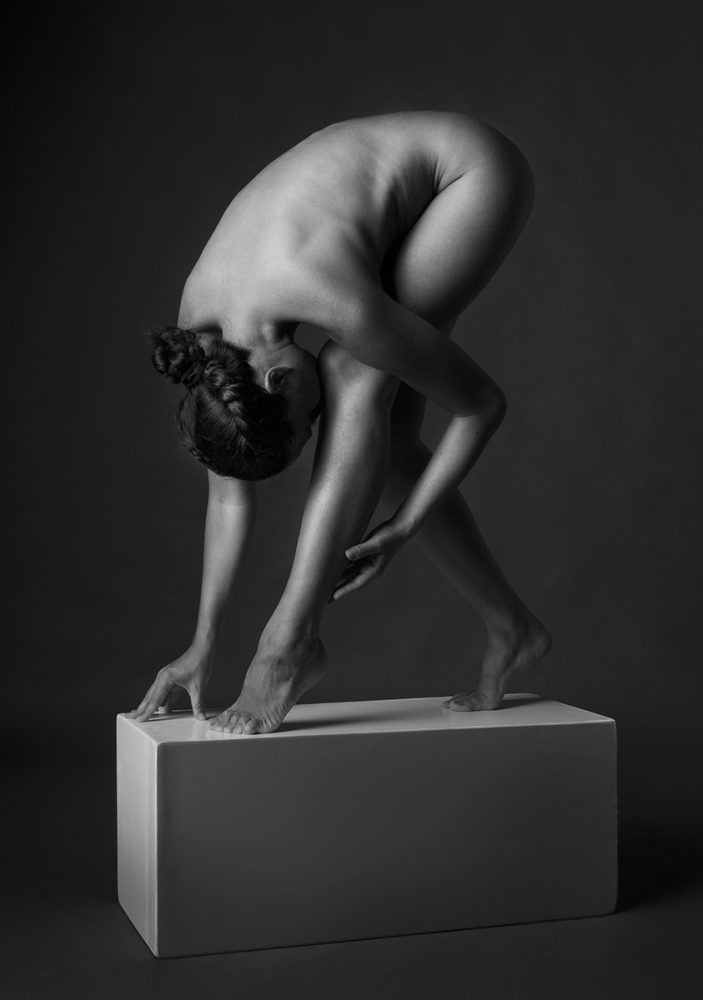
Sculpting Through Light: Michelangelo’s Influence
Michelangelo’s sculptures, especially David and The Rebellious Slave, show tension, balance, and anatomical precision. These figures were not meant to be passive. Their carefully positioned limbs and subtle weight shifts create a strong illusion of life frozen in time.
Photography reflects this sculptural approach. Just as Michelangelo carved muscles to catch light dynamically, photographers use directional lighting to shape the body with contrast and shadow. The mix of sharp definitions and soft gradients highlights the structure of the human form, emphasizing depth and energy without any real motion.
Precision in Pose: The Weight of Stillness
True sculptural elegance comes from intentional positioning. When a model holds a pose, every small adjustment counts. The slight tilt of the head, the tension in the fingertips, and the engagement of muscles beneath the skin all matter.
- Contrapposto Balance: Inspired by classical statues, poses with shifted weight and asymmetry create a sense of realism and movement, even when still.
- Tension vs. Relaxation: A flexed foot or extended arm can generate subtle energy, guiding the viewer’s eye through the frame.
- Negative Space as Structure: Shadows carve out voids that refine the composition, ensuring the figure doesn’t just float but interacts with its surroundings.
Harnessing Light for Dimensionality
Different lighting styles shape the figure in distinct ways:
- Hard directional light produces sharp edges, much like the defined contours in Michelangelo’s carvings.
- Soft diffused light resembles the gradual fading seen in polished marble, smoothing transitions while preserving form.
- Silhouettes and relief lighting change the figure into pure shape, stripping away detail while maintaining essence, similar to classical friezes and relief sculptures.
When working with models, thinking like a sculptor instead of a traditional portrait artist opens up new possibilities. Instead of capturing quick action, photographers shape lasting moments that emphasize mass, balance, and tension. A well-crafted pose is not merely still; it holds energy, just waiting to be seen.