

Studio
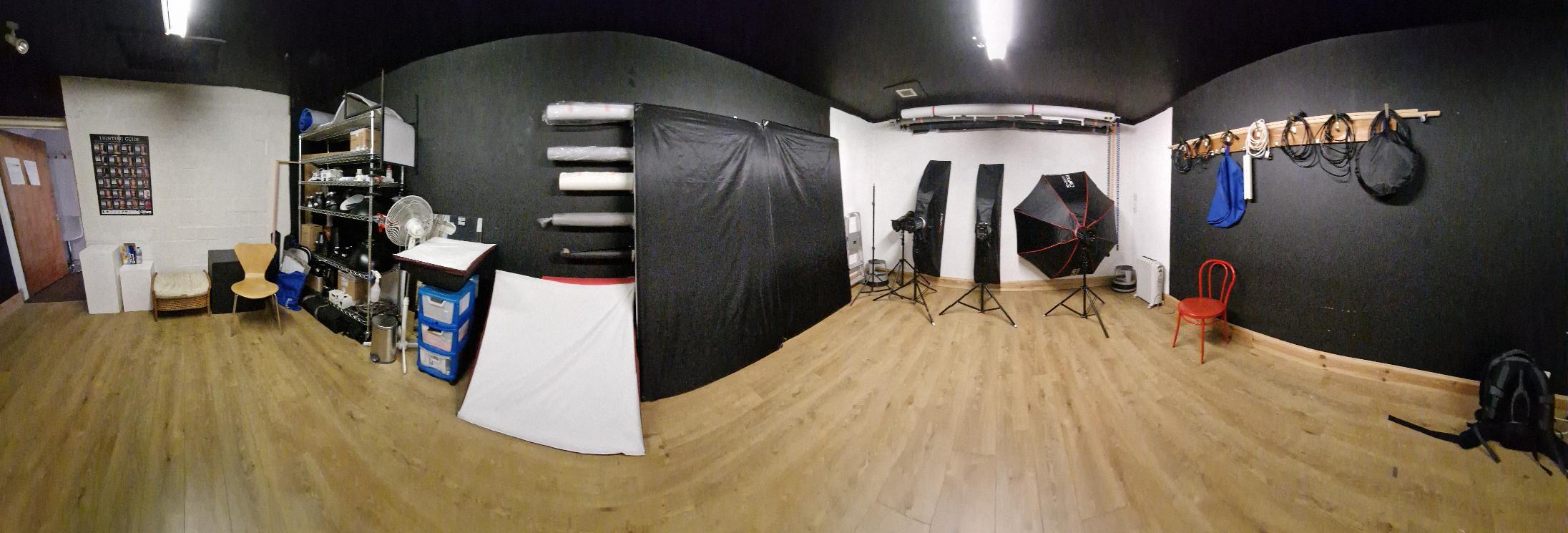
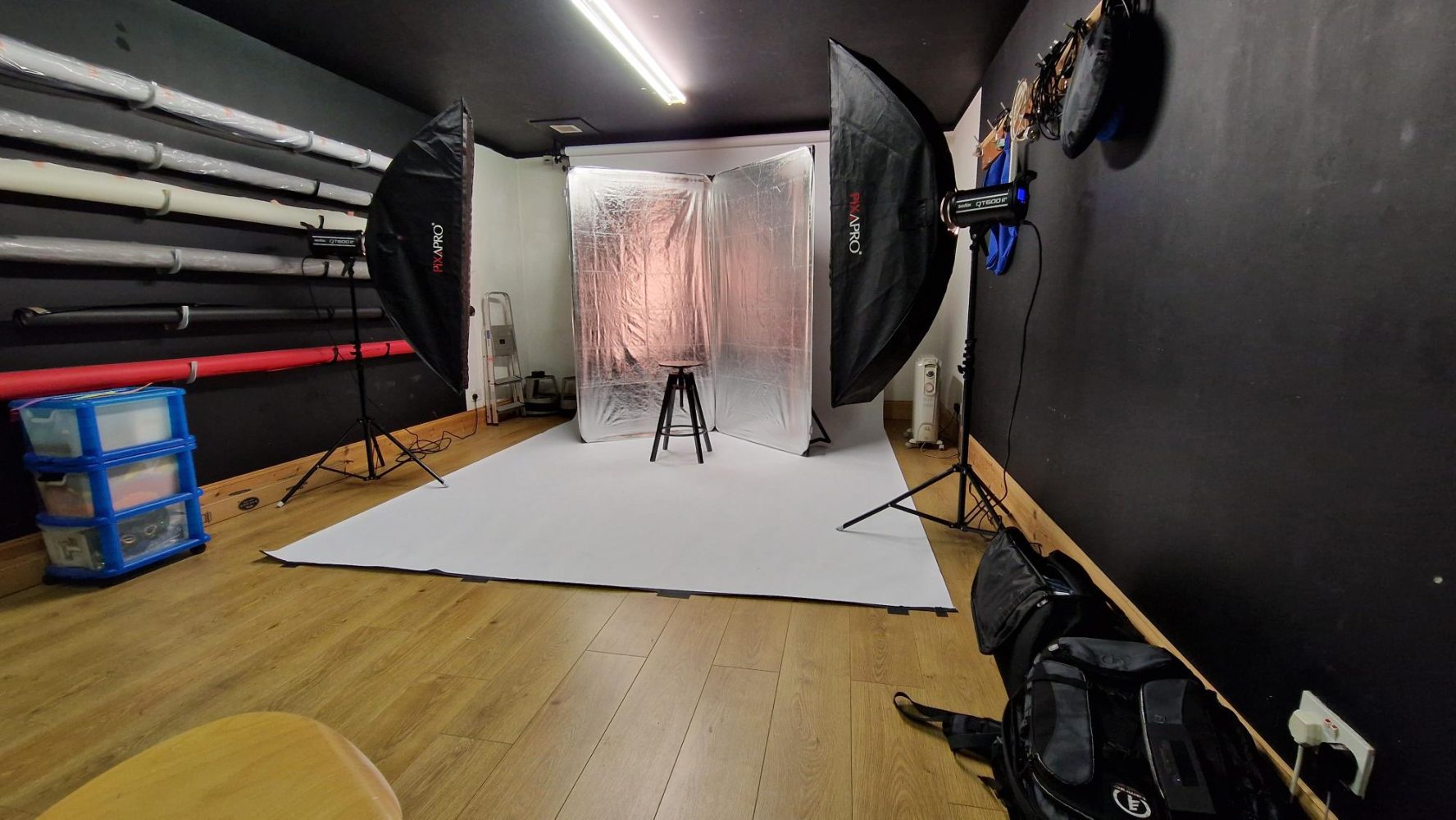
A few years ago, I took advantage of a house renovation to create a purpose-built photographic studio. While I’m currently working out of a temporary space nearby, I plan to have my home studio back up and running soon. This dedicated environment allows me to refine lighting setups, experiment with composition, and maintain full creative control over each shoot.
Currently I switch between my home studio in Inverurie and a dedicated city-centre club-studio in Aberdeen.
Camera
The heart of any photographer’s kit is their camera. I’ve relied on Canon gear for years due to its reliability, image quality, and ease of maintenance. My workhorse for over a decade was the Canon 5D MkII, but as technology evolved, I transitioned to the Canon 5DsR – a 50-megapixel powerhouse that delivers near-medium format quality with advanced autofocus and metering systems. It’s the ultimate SLR for studio work, offering exceptional detail without the hefty price tag of a full medium-format system.
Lenses
I’m a firm believer in using Canon’s L-series lenses to achieve the finest image quality under all lighting conditions. My go-to lenses include:
- Canon EF 70-200mm f/4L IS II USM – Versatile for portraits and movement shots.
- Canon EF 85mm f/1.8 USM – Ideal for capturing depth and emotion in close-up work.
- Canon EF 24-70mm f/2.8L USM – A flexible all-rounder for various compositions.
- Canon EF 17-40mm f/4L USM – Perfect for dramatic wide-angle perspectives.
- Canon EF 50mm f/1.4 USM – A classic choice for natural, balanced framing.
Lighting
Light is the lifeblood of photography, shaping mood, texture, and depth. While high-end brands like Profoto or Broncolor would be ideal, I’ve found a balance between quality and practicality with Bowens Gemini Professional monolights for studio work and Godox AD200 & AD600 Pro battery-operated heads for location shoots. These setups provide versatility and reliability, allowing me to sculpt light effectively without exceeding budget constraints.
I also use a variety of softboxes, umbrellas, and modifiers to shape light around the model, ensuring each image aligns with my artistic vision. While freezing a dancer’s fingertips mid-leap might require ultra-high-speed strobes, my current setup gets remarkably close – allowing for dynamic, expressive imagery.